Comparing Hardwood Decking vs. Composite Decking
Building a deck is an excellent way to expand your living space and enhance the enjoyment of your home. However, one of the most critical decisions you’ll face is choosing the right decking material. The choice between hardwood decking and composite decking can significantly impact the appearance, durability, maintenance, and overall cost of your deck.
In this comprehensive guide, we’ll delve deep into the characteristics, advantages, and drawbacks of both hardwood and composite decking. By understanding these factors, you’ll be better equipped to make an informed decision that suits your lifestyle, budget, and aesthetic preferences.
- Hardwood decking offers unmatched natural beauty and exceptional durability but requires regular maintenance to preserve its appearance and longevity.
- Composite decking provides a low-maintenance alternative with eco-friendly options but may lack the authentic look and feel of real wood.
- Important factors to consider include cost, maintenance requirements, environmental impact, durability, climate suitability, and personal aesthetic preferences.
Understanding Hardwood Decking
Definition of Hardwood
Hardwoods are derived from broad-leaved trees (angiosperms) that are often deciduous, meaning they shed their leaves annually. These woods are characterized by their dense cellular structure, which contributes to their strength, hardness, and resistance to wear. The tight grain patterns and rich color variations make hardwoods highly desirable for applications where both aesthetics and durability are important.
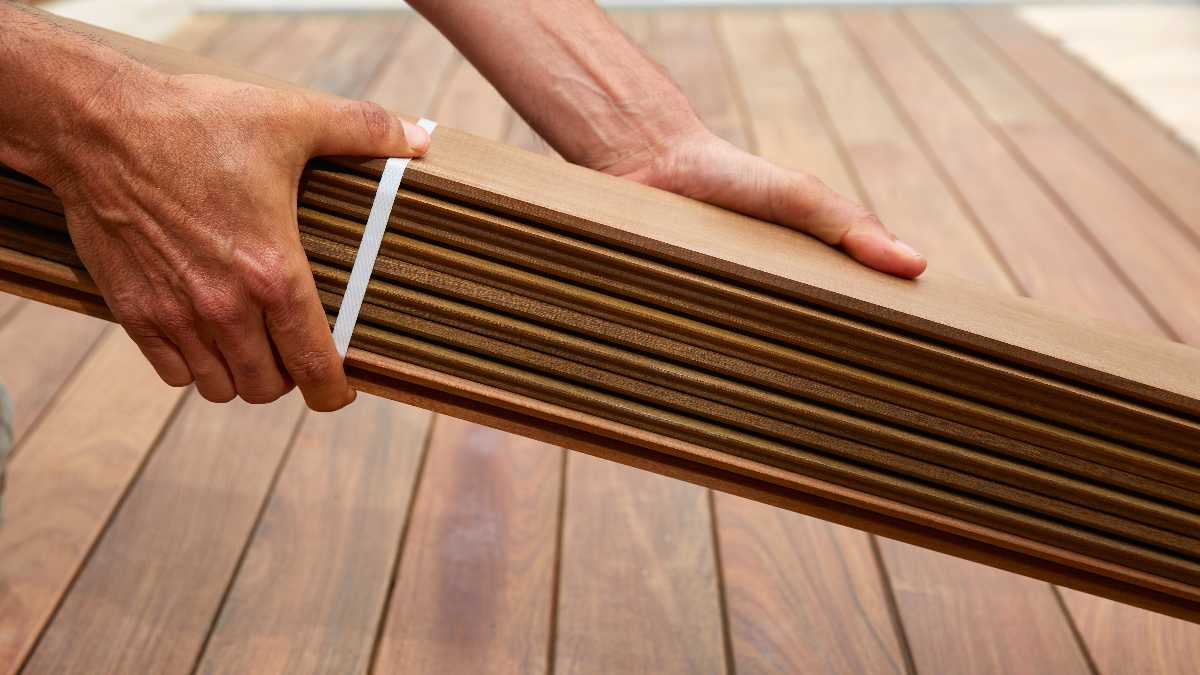
Common Types of Hardwood Used in Decking
Ipe (Brazilian Walnut)
- Origin: Native to Central and South America.
- Characteristics: Extremely hard and dense, with a Janka hardness rating of 3,680 (one of the highest among hardwoods).
- Durability: Naturally resistant to rot, decay, insects, and mold. Can last 40 years or more with proper care.
- Appearance: Rich brown tones with variations that age to a silver-gray patina if left untreated.
Teak
- Origin: Primarily found in Southeast Asia, Africa, and the Caribbean.
- Characteristics: Contains natural oils that provide resistance to water, insects, and decay.
- Durability: Highly durable; can withstand extreme weather conditions.
- Appearance: Golden to medium brown color with a straight grain and coarse texture.
Mahogany
- Origin: Found in the Americas and Africa.
- Characteristics: Moderate to high hardness, with good workability.
- Durability: Resistant to rot and insects, though less so than Ipe or Teak.
- Appearance: Reddish-brown color that deepens over time, with a fine, straight grain.
Cumaru (Brazilian Teak)
- Origin: Native to South America.
- Characteristics: Extremely hard and dense, with a Janka hardness rating of 3,540.
- Durability: Highly resistant to rot, decay, and insect attack.
- Appearance: Varies from golden tan to reddish-brown hues, often with interlocking grain patterns.
Characteristics of Hardwood Decking
- Natural Beauty: Each piece of hardwood is unique, showcasing distinct grain patterns, knots, and color variations that contribute to a warm and inviting outdoor space.
- Strength and Durability: Hardwoods’ dense composition makes them less susceptible to scratches, dents, and other physical damage, ensuring the deck remains sturdy under heavy use.
- Longevity: With proper maintenance, hardwood decks can last anywhere from 25 to 50 years, depending on the species and environmental conditions.
- Environmental Resistance: Many hardwoods are naturally resistant to moisture, fungi, and insects, reducing the need for chemical treatments.
Understanding Composite Decking
Definition of Composite Decking
Composite decking is a synthetic building material made from a blend of wood fibers, plastics, and a binding agent. This combination results in a product that mimics the appearance of natural wood while offering enhanced durability and minimal maintenance requirements.
Materials Used in Composite Decking
- Wood Fibers: Provide the composite with a natural look and structural integrity.
- Plastics: Typically recycled polyethylene (HDPE or LDPE) or polypropylene, which offer moisture resistance and longevity.
- Additives: Such as UV stabilizers, colorants, and bonding agents to improve performance and appearance.
Characteristics of Composite Decking
- Low Maintenance: Does not require painting, staining, or sealing. Regular cleaning with soap and water is usually sufficient to keep it looking new.
- Consistency: Manufactured to have a uniform appearance, eliminating the variability found in natural wood.
- Durability: Resistant to rot, warping, splintering, and insect damage.
- Eco-Friendly Options: Many composites are made from recycled materials, reducing environmental impact.
- Design Variety: Available in a wide array of colors, textures, and finishes, including products that closely mimic the look of exotic hardwoods.
IV. Pros and Cons of Hardwood Decking
Pros
Aesthetic Appeal
- Unique Beauty: Each hardwood deck is one-of-a-kind due to natural variations in the wood.
- Aging Gracefully: Hardwoods can develop a desirable patina over time, adding character to the deck.
- High-End Look: Often associated with luxury and quality, enhancing property value.
Longevity
- Durable Lifespan: Some hardwoods can last over 50 years with appropriate maintenance.
- Weather Resistance: Naturally withstands harsh weather conditions, including extreme temperatures and moisture.
Strength and Durability
- Load-Bearing Capacity: Can support heavy loads without bending or sagging.
- Impact Resistance: Less likely to suffer damage from dropped objects or heavy foot traffic.
Cons
Maintenance Requirements
- Regular Upkeep: Requires annual or bi-annual cleaning, sanding, and application of sealants or stains to protect against weathering and UV damage.
- Cost of Maintenance: Over time, the costs of cleaning products, sealants, and potential professional services can add up.
- Labor Intensive: Maintenance can be time-consuming and may require specialized knowledge or tools.
Cost
- Higher Initial Investment: Premium hardwoods are more expensive per board foot compared to other decking materials.
- Installation Costs: May require specialized tools and fasteners, increasing labor costs.
Environmental Concerns
- Deforestation: Unsustainable logging practices can lead to habitat destruction and biodiversity loss.
- Certification Necessity: Ensuring the wood is sourced from responsibly managed forests (e.g., FSC-certified) is essential but may limit options and increase costs.
Pros and Cons of Composite Decking
Pros
Low Maintenance
- Ease of Care: Simple cleaning routines without the need for sealing or staining.
- Time-Saving: Less time spent on upkeep means more time enjoying your deck.
- Cost Savings Over Time: Reduced maintenance expenses can offset the higher initial cost.
Variety of Options
- Design Flexibility: Wide range of colors, finishes, and styles to match any architectural aesthetic.
- Consistency: Uniform appearance without knots or grain variations.
Eco-Friendly Options
- Recycled Materials: Many composites use reclaimed wood and plastics, diverting waste from landfills.
- Sustainability: Reduces the demand for virgin timber and associated environmental impacts.
Cons
Cost
- Upfront Expense: High-quality composite decking can be as expensive or more costly than premium hardwoods.
- Limited Return on Investment: While durable, composites may not add the same value to a property as natural wood.
Heat Retention
- Surface Temperature: Composites can absorb and retain heat, becoming hot to the touch in direct sunlight.
- Comfort Concerns: May require shading solutions or the use of outdoor rugs to mitigate heat.
Appearance
- Synthetic Look: Some products may not convincingly replicate the look of real wood.
- Fading and Staining: Lower-quality composites may fade over time or be susceptible to staining from spills.
Comparative Analysis
Cost Comparison
Initial Costs:
- Hardwood: Material costs can be high due to the quality and rarity of certain woods. Installation may also be more expensive due to the need for specialized skills and tools.
- Composite: Material costs vary widely based on brand and quality. Installation is generally straightforward but may require specific fasteners.
Long-Term Costs:
- Hardwood: Ongoing maintenance costs for cleaning, sealing, and repairs.
- Composite: Minimal maintenance costs; however, if repairs are needed, replacing sections can be more complex.
Maintenance Needs
Hardwood:
- Cleaning: Regular sweeping and annual deep cleaning to remove dirt and prevent mold.
- Sealing/Staining: Necessary to protect against UV rays and moisture. Frequency depends on exposure and product used.
- Inspections: Periodic checks for signs of rot, insect damage, or structural issues.
Composite:
- Cleaning: Occasional washing to remove dirt and prevent mildew.
- No Sealing Required: Does not need protective coatings.
- Inspections: Less prone to structural issues but should be checked for surface damage or fading.
Environmental Impact
Hardwood:
- Sourcing: Impact depends on whether the wood is harvested sustainably.
- Carbon Footprint: Wood acts as a carbon sink, storing carbon dioxide absorbed during tree growth.
- End of Life: Biodegradable and can be repurposed or recycled.
Composite:
- Materials: Often contains recycled plastics and wood fibers, reducing landfill waste.
- Manufacturing: Production processes can be energy-intensive and involve chemicals.
- End of Life: Not biodegradable; disposal can be problematic, though some manufacturers offer recycling programs.
Durability and Lifespan
Hardwood:
- Lifespan: 25-50 years with maintenance.
- Resistance: Excellent resistance to wear, insects, and rot in many species.
Composite:
- Lifespan: 20-30 years, with warranties often covering this period.
- Resistance: Highly resistant to rot, insects, and splintering; however, may be susceptible to surface scratches.
Aesthetic Differences
Hardwood:
- Natural Variations: Unique grain patterns and color variations add character.
- Aging Process: Can develop a desirable weathered look or maintain original color with treatment.
Composite:
- Uniform Appearance: Consistent color and texture throughout.
- Customization: Options to mimic exotic woods or choose unconventional colors.
Factors to Consider When Choosing
Budget Constraints
- Short-Term vs. Long-Term Costs: Evaluate both the initial investment and ongoing expenses.
- Value Addition: Consider how the decking material may affect property resale value.
Desired Aesthetic
- Personal Preference: Decide whether the authenticity of natural wood or the customizable options of composite align with your vision.
- Home Architecture: Choose a material that complements the style of your home and landscaping.
Willingness to Perform Maintenance
- Time Availability: Assess if you have the time or inclination for regular upkeep.
- Professional Services: Consider if you’re willing to hire professionals for maintenance tasks.
Climate and Environmental Conditions
- Local Weather: Some materials perform better in certain climates (e.g., hardwoods in humid environments, composites in areas with temperature extremes).
- Sun Exposure: High UV exposure may fade certain materials over time.
Sustainability and Environmental Values
- Eco-Conscious Choices: If environmental impact is a priority, research the sourcing and manufacturing practices of the materials.
- Certifications: Look for products with environmental certifications, such as FSC for wood or LEED points for composites.
Conclusion
Selecting the right decking material is a significant decision that affects not only the look and feel of your outdoor space but also its functionality and longevity. Both hardwood and composite decking offer distinct advantages and challenges.
Hardwood decking is ideal for those who appreciate natural beauty and are willing to invest time and resources into maintenance. Its durability and timeless appeal can add significant value to your property.
Composite decking suits homeowners seeking a low-maintenance solution with a variety of design options. Its resistance to common decking issues like rot and insect damage makes it a practical choice for many.
Final Recommendations:
- Evaluate Your Priorities: Determine what factors—be it aesthetics, maintenance, cost, or environmental impact—are most important to you.
- Consider Professional Advice: Consulting with a decking specialist can provide insights tailored to your specific situation, including local climate considerations and installation nuances.
- Research Products Thoroughly: Not all hardwoods or composites are created equal. Investigate the specific products available to you, including warranty details and user reviews.
Additional Considerations
Installation Techniques
- Hardwood: May require pre-drilling and the use of stainless steel fasteners to prevent corrosion and staining.
- Composite: Often designed for hidden fasteners, providing a cleaner look but possibly requiring specific installation tools.
Safety Factors
- Slip Resistance: Consider textures and finishes that provide traction, especially in wet conditions.
- Fire Resistance: Some composites offer higher fire resistance ratings, which may be important in fire-prone areas.
Accessibility and Comfort
- Surface Temperature: If heat retention is a concern, lighter-colored materials or shaded areas can mitigate discomfort.
- Splinter-Free Surface: Composites generally offer a splinter-free surface, beneficial for families with children or pets.
References and Resources
Additional Reading
- Forest Stewardship Council (FSC): www.fsc.org
- Composite Decking Manufacturers: Visit our list of composite decking manufacturers.
- Consumer Reports on Decking Materials: Independent reviews and comparisons of decking options.
Professional Consultation
- Local Deck Builders: Engage with experienced professionals who understand the regional climate and building codes.
- Home Improvement Stores: Many offer workshops or consultations to help you understand material options.
By carefully considering the detailed information provided, you can make a well-informed decision that aligns with your needs and enhances your outdoor living experience for years to come.