Best Wood for Decks: Our Comprehensive Guide
Selecting the perfect wood for your deck can significantly impact its beauty and longevity. With numerous options available, the decision-making process can quickly become overwhelming for homeowners and builders alike. Understanding the advantages and drawbacks of various decking materials is essential for achieving a durable and visually appealing outdoor space.
This comprehensive guide will explore the differences between hardwoods and softwoods, delve into traditional choices such as cedar and redwood, and highlight exotic options like Ipe and Cumaru. Each type has unique benefits and challenges, making an informed choice crucial for your deck’s performance and aesthetics.
From maintenance requirements to cost factors and durability, we will equip you with all the knowledge needed to make the best decision for your decking project. Join us as we navigate through the best wood for decks, ensuring your outdoor haven stands the test of time.
Understanding the Importance of Choosing the Right Wood
Choosing the right wood for your deck is crucial as it affects aesthetics, maintenance, and potential ROI. Exotic hardwoods like ipe offer stunning visuals and rich colors but demand regular upkeep to maintain their allure. Cedar and redwood provide natural beauty but are softer, making them prone to scratches and requiring more frequent maintenance.
Pressure-treated lumber is another option that can be stained for a specific look; however, it, too, needs regular care to prevent fading. Each wood type varies in resistance to environmental conditions, directly impacting the deck’s durability and longevity. Below is a quick comparison of popular decking woods:
| Wood Type | Aesthetics | Durability | Maintenance |
|---|---|---|---|
| Ipe | High | Excellent | High |
| Cedar | Medium-High | Moderate | Medium |
| Redwood | Medium-High | Moderate | Medium |
| Pressure-Treated | Variable (stain) | High | Medium-High |
Understanding these aspects helps in making an informed decision that aligns with your maintenance willingness and desired look. Selecting the right wood ensures your deck remains a beautiful and valuable addition to your home for years.
Types of Wood Available for Decking
Selecting the right wood for decking involves understanding material differences in durability, maintenance, and cost. Hardwoods like oak and ash offer high durability and weather resistance but may be expensive. Conversely, pressure-treated wood, commonly southern yellow pine or Douglas fir, provides an economical choice, requiring routine maintenance to prevent issues like rot.
Hardwoods vs. Softwoods: Key Differences
Hardwoods come from slow-growing, broad-leaved trees such as Teak, Ipe, and Oak, known for their density and resilience. They generally require less treatment than softwoods from faster-growing conifers like Pine and Cedar. While hardwoods excel in durability, the suitability of each species can vary, emphasizing the need for a well-informed choice.
Traditional Choices: Cedar, Redwood, and Pressure-Treated Lumber
Cedar and redwood are prized for their natural beauty and moisture resistance, aging gracefully to a silvery tone. These woods offer moderate durability and can last for decades if maintained well. Pressure-treated lumber, although needing treatment against moisture and insects, presents a budget-friendly option but requires diligent upkeep to prevent rot and mildew.

Cedar
Cedar is a popular choice for decking due to its natural resistance to moisture, decay, and insect infestation. Its aromatic oils provide a pleasant scent and enhance its durability. Cedar wood boasts a rich color palette ranging from light amber to deep reddish-brown, and if left untreated, it gracefully ages to a silvery-gray patina. Lightweight and easy to work with, cedar is ideal for professional builders and DIY enthusiasts. Regular maintenance like sealing or staining can help preserve its color and extend its lifespan.
Redwood
Renowned for its stunning natural beauty, redwood offers exceptional resistance to warping, splitting, and checking. Similar to cedar, it contains natural tannins that make it resistant to rot and insect damage. The wood’s hues range from light pinkish-brown to deep red, adding a luxurious aesthetic to any outdoor space. Redwood is slightly denser than cedar, providing increased durability and strength. Periodic sealing or staining is recommended to maintain its vibrant color and protect it from the elements.
Pressure-Treated Lumber
Pressure-treated lumber is a budget-friendly option chemically treated to resist rot, decay, and insect infestation. Typically made from pine or fir, the wood is infused with preservatives under high pressure, extending its durability for outdoor use. While it’s widely available and cost-effective, pressure-treated lumber requires diligent upkeep. Regular sealing and staining are necessary to prevent moisture absorption, rot, and mildew growth. Additionally, caution should be exercised when handling and cutting this wood due to the chemicals used in its treatment.
Exotic Hardwoods: Ipe and Cumaru
Ipe, or Brazilian walnut, stands out with its extreme hardness and natural resistance to decay, boasting a long lifespan with minimal maintenance. Its high cost reflects its durability and longevity of 30 to 75 years. Cumaru shares similar attributes, excelling in moisture and insect resistance, making it a preferred choice for outdoor decking. Both woods necessitate sustainable sourcing to address environmental concerns.
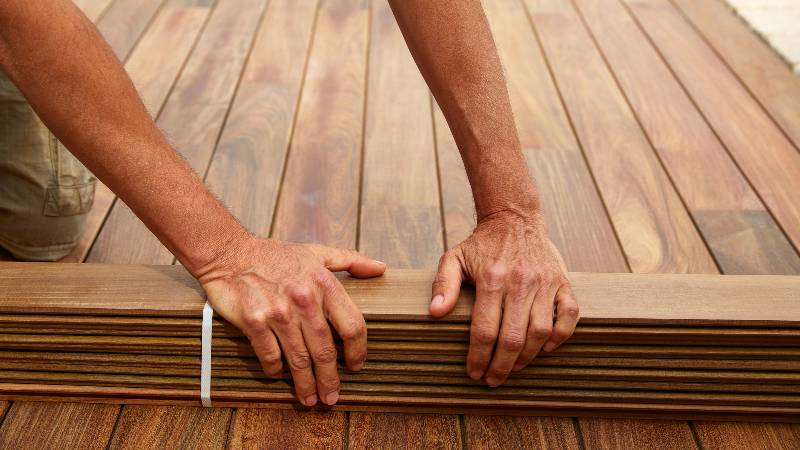
Pros and Cons of Different Decking Woods
Choosing the right wood for your deck involves balancing cost, durability, and maintenance. Hardwood decking, like oak or ash, offers superior weather resistance and durability, though it has a higher price tag. In contrast, softwoods like pine require chemical treatments to resist rot and insects, often resulting in higher maintenance needs. Pressure-treated (PT) wood is affordable but needs regular upkeep to maintain its appearance. Cedar and redwood stand out for their natural beauty and decay resistance despite lacking chemical preservatives. While wood decks are often cheaper initially than composites, regular maintenance can increase long-term costs.
Advantages of Hardwoods
Hardwoods are durable and weather resistant, outperforming softwoods for decks enduring heavy foot traffic. Tropical hardwoods, such as mahogany and ipe, effectively resist moisture, insects, and warping, offering a long-lasting decking solution. Ipe wood’s density lessens maintenance needs and minimizes concerns about rot and pests, making it a practical outdoor choice. Due to their heaviness, installation may require pre-drilling, ensuring secure deck boards. Despite high initial costs, the longevity and performance of hardwoods can provide greater value over time.
Advantages of Softwoods
Softwood decking, including species like pine and cedar, provides a cost-effective option compared to hardwoods. Pressure-treated softwoods are designed to resist rot, offering durability outdoors. Cedar wood decks are low-maintenance and age gracefully, requiring minimal intervention. Cedar and redwood decks are valued for their natural beauty, with rich colors and distinct grain patterns enhancing aesthetic appeal. Softwood decking can last around 20 years when properly maintained, making it a viable long-term choice.
Modified Woods: An Enhanced Option
Modified wood is an innovative option for decking, utilizing sustainable softwood species that undergo a non-toxic process to increase their density. This enhancement allows them to rival tropical hardwood in terms of performance. Architects and homeowners appreciate modified wood for its aesthetic appeal, superior durability, and minimal maintenance needs.
Unlike traditional pressure-treated wood, modified wood decking contains no harmful chemicals, making it a safe choice for families. This wood type is available in various grades, offering choices between smooth, polished finishes and rich, rustic appearances. As it ages, modified wood develops a natural silver-gray color, which adds visual charm to outdoor spaces.
When it comes to modified woods for decking, several top brands have gained popularity for their innovative processes and high-quality products:
- Accoya stands out with its acetylated wood, known for exceptional durability and dimensional stability, making it a long-lasting decking choice.
- Kebony transforms sustainable softwoods using a bio-based liquid infusion, resulting in a hardwood-like appearance and enhanced performance without harming the environment.
- Thermory offers thermally modified wood that provides superior resistance to decay and improved stability, all achieved through a chemical-free heat treatment process.
In addition to its aesthetic benefits, modified wood is resistant to insects and pests, making it a practical option for those concerned about longevity and environmental impact. It marries function and form while being an eco-friendly alternative to traditional decking materials. With its combination of beauty and safety, modified wood stands out as the best wood for decks.
Evaluating Cost Factors
When selecting the best wood for decks, evaluating cost factors is crucial. Pressure-treated lumber is the most affordable initial option due to its easy accessibility, but it may incur higher long-term maintenance costs. Exotic woods like Tigerwood, costing between $7 and $15 per square foot, offer natural beauty but have frequent maintenance needs that add to their overall expense.
Despite their lower upfront cost, traditional wooden decks can become more expensive over time due to maintenance efforts like yearly repainting or staining to prevent rot and mold. This continuous upkeep can make wood less economical than composite or PVC options, which often require less maintenance.
Here’s a quick comparison of common decking materials:
| Material | Initial Cost | Maintenance Cost |
|---|---|---|
| Pressure-Treated Wood | Low | High |
| Exotic Woods (e.g., Tigerwood) | High | High |
| Composite/PVC | Moderate to High | Low |
When evaluating decking materials, consider both the initial investment and the long-term maintenance costs to find the best wood for your needs.
Aesthetic Considerations for Your Deck
When considering the best wood for decks, aesthetics play a crucial role. TimberTech offers capped polymer and capped composite decking that closely mimics natural wood, providing the beauty of real wood with added durability. These options feature nuanced color blending and detailed wood grain patterns, achieving a sophisticated appearance often associated with high-quality wood decking.
Cedar and redwood are popular choices for those preferring natural wood. Cedar provides a natural look and can be easily stained, offering homeowners a range of aesthetic possibilities. Its warm tones contribute a rustic charm to outdoor spaces. Similarly, redwood delivers a warm and inviting appearance, enhancing the natural beauty of your deck.
Composite decking, which blends wood and plastic, is a low-maintenance alternative retaining visual appeal. It doesn’t require frequent staining or sealing, making it an attractive option for busy homeowners who prioritize aesthetics and ease of care.
Aesthetic Options for Decking:
- TimberTech: Mimics real wood, detailed grain patterns
- Cedar: Natural, easily stained
- Redwood: Warm, inviting
- Composite: Low-maintenance, attractive
Choosing the right material will depend on your aesthetic preferences, maintenance considerations, and the desired ambiance for your outdoor space.
Longevity and Durability of Decking Materials
Longitudity and durability are key considerations when selecting decking materials. Ipe, or Brazilian walnut, is a top choice due to its exceptional lifespan, which can exceed 25 years without much maintenance. This hardwood is known for its resistance to decay and insects.
Composite and PVC decking materials offer a durable alternative, resisting moisture, insects, and fading. These materials require minimal maintenance, making them appealing for long-lasting decks with little upkeep.
Mahogany decking stands out for its impressive lifespan of about 40 years with proper care. Regular maintenance, including annual cleaning and biennial staining, is necessary to preserve its durability and appearance.
Pressure-treated pine is popular for its affordability and durability despite needing more maintenance than hardwoods and composites. It’s cost-effective but requires frequent staining or sealing to maintain its color and integrity.
Weathering elements like UV rays and moisture often lead to discoloration in wood decks. Applying wood deck stain or oil helps restore color but is a temporary fix necessitating frequent reapplication. Selecting the right material based on your maintenance preference and budget will ensure a lasting deck.
Maintenance Needs for Different Types of Wood
Understanding the maintenance demands of various woods is crucial when choosing deck materials. Hardwood decks need regular upkeep, including annual inspections and treatments like sanding, staining, and sealing, to protect their longevity and appeal. Although redwood and cedar are naturally rot-resistant, they require yearly cleaning and sealing to avoid degradation.
Tropical hardwoods such as Ipe demand comparable maintenance to other exotic woods. They need regular washing and staining to preserve their appearance. Regular maintenance extends the deck’s lifespan and helps prevent costly repairs and replacements, reducing overall ownership expenses.
Cleaning and Care
Regular care for wood decks involves an annual inspection and cleaning with potent solutions to eliminate mold and mildew. Power washing is often beneficial to ensure thorough cleansing. Despite hardwood decks being more durable, they still face issues like cracking and rotting, similar to softwoods needing treatment for outdoor resilience.
Pressure-treated wood decking requires annual power washing and biennial application of stains or preservatives to prevent warping and splitting. Similarly, cedar decking needs regular refinishing to extend its life and minimize splintering and cracking. Systematic cleaning and care effectively prolong the lifespan and aesthetics of wood decks.
Sealing and Staining Options
Wood decks necessitate regular treatments such as staining, sanding, and sealing to maintain their durable and aesthetic qualities over time. Natural woods like cedar and redwood have different maintenance needs concerning sealing and staining than other materials. The maintenance cost involves buying supplies for sealing and staining and potential labor for repairs.
In contrast, composite decking requires minimal maintenance, needing only periodic rinsing and cleaning. Traditional wood decking may incur additional expenses due to frequent maintenance and potential full deck replacements every 10 to 15 years. Effective sealing and staining are essential in preserving the beauty and longevity of wood decks.
Performance Characteristics: What to Look For
When choosing wood for decks, performance characteristics are crucial. Durability is a key factor; composite decking materials, known for their longevity, can last 25 years or more with minimal maintenance. PVC decking is similarly resilient, enduring heavy traffic and lasting 20 to 30 years, making it suitable for busy households.
Natural wood options like Ipe stand out for their robustness. Ipe boasts a high Janka hardness rating, naturally resisting termites, rot, and decay while easily handling heavy foot traffic. This makes it a top choice for those seeking a beautiful, enduring deck.
Aesthetic flexibility also matters. Wood composite decking shines here, offering a range of styles and colors without compromising on low maintenance needs. Meanwhile, plastic decking retains its color over time, but its appearance may not appeal to everyone due to potential artificiality.
Consider the following factors when selecting wood for decks:
- Durability: Composite, PVC, Ipe
- Maintenance: Low for composite and plastic
- Aesthetic flexibility: Composite
- Natural resistance: Ipe
Each wood type offers unique advantages, and weighing these performance characteristics can help you make the best choice for your deck.